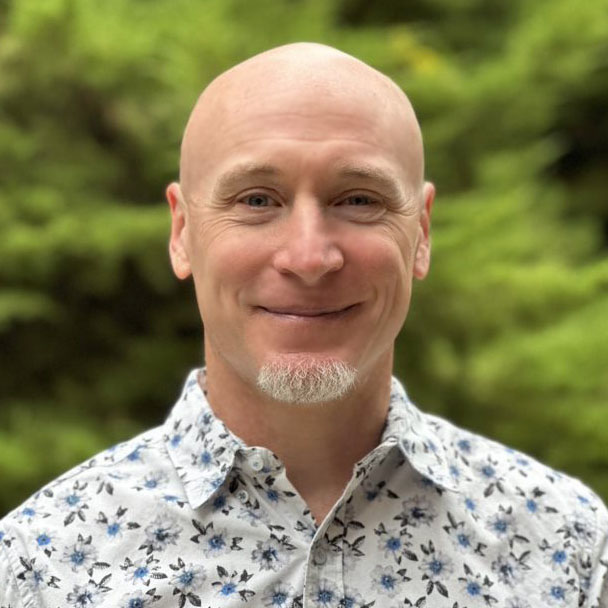
- Professor
- Bornander Anderson Honors Distinguished Faculty
Biography
Dr. Kabasenche is a Professor of Philosophy (Career-track) in the School of Politics, Philosophy, and Public Affairs and the Ethics Thread Director in the Elson S. Floyd College of Medicine. His research and teaching focus is in practical ethics/ bioethics, particularly ethical issues related biotechnology. Past publications have looked at ethical issues related to the enhancement of moral capacities, the intergenerational effects of epigenetic changes caused by environmental exposures, the use of memory suppressing pharmaceuticals, and the equipoise standard in research ethics. In addition, Dr. Kabasenche has published on the ethics of teaching ethics, particularly to STEM students.
Dr. Kabasenche regularly teaches Biomedical Ethics, Environmental Ethics, and Introduction to Ethics at the undergraduate level. At the graduate level he teaches Biomedical Research Ethics and in the M.D. curriculum in the ESFCOM
Fellow, Center for Reproductive Biology
Fellow, Center for Integrated Biotechnology
Education
- Ph.D. (Philosophy), University of Tennessee
- M.A., (Theology), Wheaton College
- B.A. (Philosophy and Biology), Wheaton College
Research Interests
bioethics/ ethics of health care, ethics of biotechnology, ethics of research
Recent Publications
- William Kabasenche “Making Ethical Considerations Transparent in the Formulation of Public Health Guidance,” American Journal of Bioethics 24:4 (2024): 97-99.
- Jessica Knight and William Kabasenche, “Modern-Age Centaurs: A Proposal for Case Study Based Integrative Ethics Education in Chemistry,” Journal of Chemical Education 99: 10 (2022): 3360-3363.
- William Kabasenche “Forgetting Myself: Self-regarding ethical responsibilities in the use of memory modifying technologies,” American Journal of Bioethics Neuroscience 12.1 (2021): 55-56.
- William Kabasenche “(The Ethics of) Teaching Science and Ethics: A Collaborative Proposal,” Journal of Microbiology & Biology Education 15:2 (2014): 135-138.
- William Kabasenche and Michael Skinner, “DDT, epigenetic harm, and transgenerational environmental justice,” Environmental Health 13:62 (2014): 1-5.