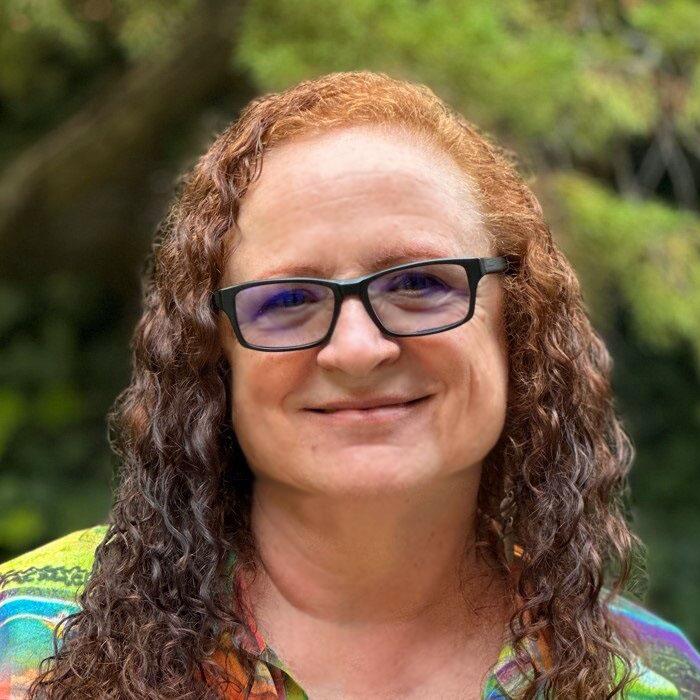
- Professor of Philosophy
Biography
Tricia Glazebrook has taught Philosopher for 29 years. She came to WSU in 2015.
She teaches several courses including an Introduction to Philosophy, Environmental Ethics, Existentialism, and Ancient History, and Public Administration and Policy for Political Science. She creates new courses, including Data Analytics Ethics, Zombie Apocalypse, and Military Ethics.
She did her PhD on Martin Heidegger, later developed into a book, Heidegger’s Philosophy of Science. She edited a book, Heidegger on Science, and recently with Susanne Claxton edited: Heidegger, Dasein, and Gender.
She has attended the United Nations Framework Convention on Climate Change multiple times and written much about climate change (CC).
She spent significant time in Ghana, Africa, to research gender, food, and changing weather, with uneducated women who described perfectly in 2003 how CC makes it imposable to grow food for their children.
For a several years, she worked with Presidents of African Universities, and now has begun working with European educators.
She has written over 60 articles and chapters, a number of Encyclopedia items, and book reviews. She has been quoted more than 1200 times.
Education
- Ph.D Philosophy, University of Toronto, Canada
- BA University of Alberta, Canada
Research Interests
Philosophy in education, food and hunger, gender and treatment of women, military differences in countries, Ghana and Africa, the global South, global oil and the sky.
Recent Publications
- (2024) ed. with S. Claxton, Heidegger, Dasein, and Gender: Thinking the Unthought. Rowman & Littlefield.
- (2024) War, Women, Civilians, and Soldiers. In Civil-Military Relations, Vol. 23, No. 19: National Defence Academy, Vienna.
- (2023) Karen J. Warren: Her work in the making of ecofeminism. Ethics & the Environment 28(1):1-11.
- (2023) With G. Akon-Yamga, Paradoxical policy in Sub-Saharan Africa: Women’s farming, oil, and sustainable development. In Thinking through Science and Technology, eds. G. Miller, Q. Zhu and H. M. Jerónimo, 435-59. New York: Rowman & Littlefield. (2022) Being human being: Dasein, civilization, capital, and home. The Heidegger Circle Annual Symposium: The Human Being. Gatherings 12, 170-76.
- (2020) With S. Noll and E. Opoku, Gender Matters: Climate Change, Gender Bias, and Women’s Farming in the Global South and North. Agriculture 10(7):267-91